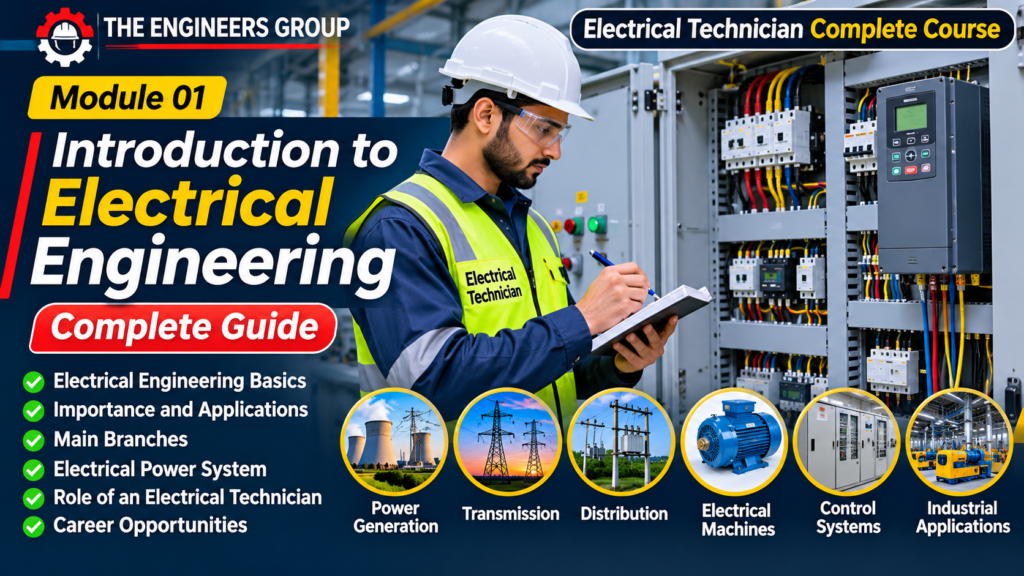
Introduction to Electrical Engineering – Complete Guide for Electrical Technicians
Introduction
Electrical engineering is one of the most important branches of engineering, playing a major role in modern industries, power generation, manufacturing, industrial automation, construction, and infrastructure development.
Almost every industrial operation depends on electrical systems for power distribution, machine operation, lighting, control systems, and automation.
The Introduction to Electrical Engineering is the first step for anyone who wants to build a career as an Electrical Technician or Electrical Engineer.
In this article, you will learn the basic concepts of electrical engineering, how electrical systems work, the importance of electricity in industries, different electrical applications, and the career opportunities available in this field.
This guide is specially designed for ITI Electrical students, Diploma holders, B.Tech students, beginners, and working electrical technicians.
Table of Contents
- What Is Electrical Engineering?
- What Is Electricity?
- Importance of Electrical Engineering
- Main Branches of Electrical Engineering
- Basic Electrical Components
- How Does an Electrical System Work?
- Electrical Power Generation
- Electrical Power Transmission and Distribution
- Applications of Electrical Engineering
- Role of an Electrical Technician
- Electrical Equipment Used in Industries
- Skills Required to Become an Electrical Technician
- Career Opportunities in Electrical Engineering
- Safety in Electrical Engineering
- Frequently Asked Questions (FAQs)
- Electrical Engineering Interview Questions
1. What Is Electrical Engineering?
Electrical Engineering is a branch of engineering that deals with the study, design, installation, operation, testing, and maintenance of electrical systems and equipment.
It involves the generation, transmission, distribution, and utilization of electrical energy.
Electrical engineering also includes electrical machines, power systems, control systems, electrical protection, and industrial automation.
Electrical engineers and technicians work with different types of electrical equipment, such as:
- Electric Motors
- Generators
- Transformers
- Circuit Breakers
- Electrical Panels
- Switchgear
- Cables and Wiring Systems
- Variable Frequency Drives (VFDs)
- Programmable Logic Controllers (PLCs)
- Power Distribution Systems
Electrical engineering is essential in industries because electrical energy is required to operate machines, pumps, compressors, conveyors, production lines, and other industrial equipment.
2. What Is Electricity?
Electricity is a form of energy associated with the presence and movement of electric charges.
In electrical circuits, electric current flows when there is a suitable potential difference and a closed conducting path.
Electricity is commonly used to operate electrical equipment, electronic devices, industrial machines, and power systems.
Basic Electrical Parameters
Every electrical technician should understand these fundamental parameters:
1. Voltage (V)
Voltage is the electrical potential difference between two points in a circuit.
Unit: Volt (V)
2. Current (I)
Current is the rate of flow of electric charge through a conductor.
Unit: Ampere (A)
3. Resistance (R)
Resistance is the opposition offered by a material to the flow of electric current.
Unit: Ohm (Ω)
4. Electrical Power (P)
Electrical power is the rate at which electrical energy is transferred or consumed.
Unit: Watt (W)
5. Electrical Energy
Electrical energy represents the total electrical energy consumed over a period of time.
Common unit: Kilowatt-hour (kWh)
These parameters are the foundation of electrical engineering and will be explained in detail in the next modules.
html💬 NEED GUIDANCE IN ELECTRICAL ?
Contact THE ENGINEERS GROUP for eBook details, course information and learning support.
MESSAGE US ON WHATSAPP3. Importance of Electrical Engineering
Electrical engineering is essential for the operation and development of modern technology and industrial infrastructure.
Some important reasons why electrical engineering is necessary include:
- Provides electrical power for industries and buildings.
- Supports industrial manufacturing and production.
- Enables the operation of electrical motors and machines.
- Supports power generation and distribution.
- Helps develop industrial automation systems.
- Improves energy efficiency and system reliability.
- Supports renewable energy technologies.
- Ensures safe operation of electrical equipment.
Without electrical engineering, modern manufacturing plants, power stations, commercial buildings, and many essential services could not operate efficiently.
4. Main Branches of Electrical Engineering
Electrical engineering includes several specialized fields.
4.1 Power System Engineering
Power system engineering deals with electrical power generation, transmission, distribution, and utilization.
Main topics include:
- Power Generation
- High Voltage Transmission
- Distribution Networks
- Substations
- Transformers
- Power System Protection
4.2 Electrical Machines
Electrical machines deal with the conversion of electrical energy into mechanical energy and mechanical energy into electrical energy.
Important machines include:
- DC Motors
- AC Motors
- Induction Motors
- Synchronous Motors
- Generators
- Transformers
4.3 Industrial Electrical Engineering
Industrial electrical engineering focuses on electrical systems used in manufacturing plants and industrial facilities.
It includes:
- Industrial Wiring
- Electrical Control Panels
- Motor Control Circuits
- MCC and PCC Panels
- Switchgear
- Electrical Maintenance
- VFD Applications
4.4 Control and Automation Engineering
This field deals with controlling machines and industrial processes using electrical and electronic control systems.
Important technologies include:
- PLC
- SCADA
- DCS
- VFD
- Sensors
- Industrial Control Systems
4.5 Renewable Energy Systems
Renewable energy engineering focuses on generating electricity from naturally replenished energy sources.
Examples include:
- Solar Power Systems
- Wind Power Systems
- Hydroelectric Power
- Battery Energy Storage Systems
5. Basic Electrical Components
Electrical systems consist of different components that work together to control, distribute, and protect electrical power.
The most important components include:
5.1 Resistor
A resistor limits or controls current flow in an electrical circuit.
5.2 Capacitor
A capacitor stores electrical energy in an electric field.
It is used in power factor correction, filtering, starting circuits, and electronic applications.
5.3 Inductor
An inductor stores energy in a magnetic field when current flows through it.
It is commonly used in electrical machines, transformers, and electronic circuits.
5.4 Switch
A switch is used to open or close an electrical circuit.
5.5 Fuse
A fuse protects a circuit by melting its fuse element when excessive current flows.
5.6 Circuit Breaker
A circuit breaker is a protective switching device designed to interrupt current during specified abnormal conditions.
5.7 Contactor
A contactor is an electrically operated switching device commonly used for controlling motors and other electrical loads.
5.8 Relay
A relay is an electrically operated device used to control a circuit based on an electrical input or operating condition.
6. How Does an Electrical System Work?
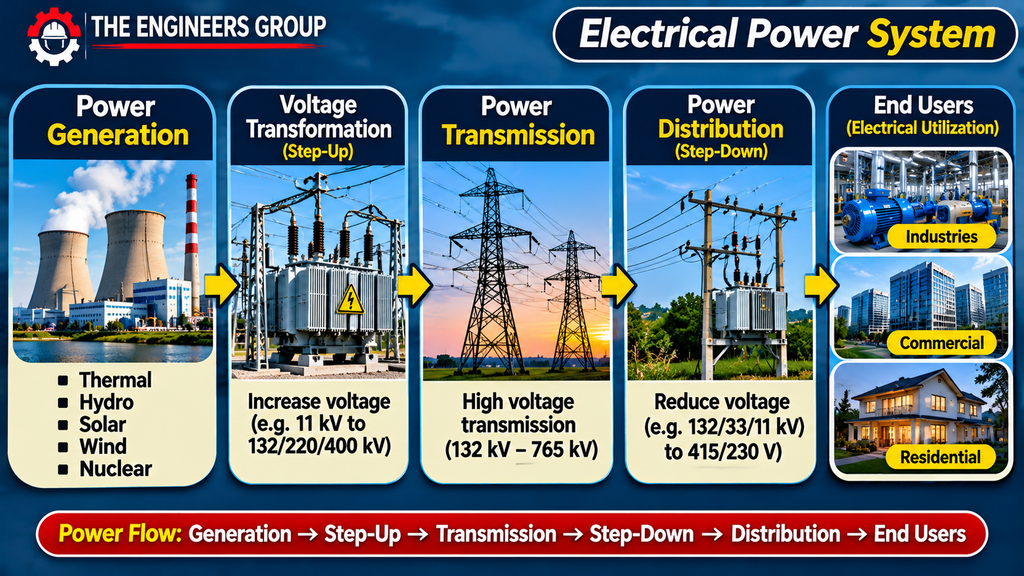
An electrical system works by generating, transmitting, distributing, and supplying electrical energy to different electrical loads.
A basic electrical power system includes the following stages:
Step 1: Power Generation
Electrical energy is generated at power stations using generators, solar panels, wind turbines, or other energy sources.
Step 2: Voltage Transformation
Transformers increase or decrease voltage levels according to the requirements of the power system.
Step 3: Power Transmission
Electrical energy is transmitted over transmission lines from generating stations to receiving substations.
Step 4: Power Distribution
Distribution substations and networks deliver electricity to industrial, commercial, and residential consumers.
Step 5: Electrical Utilization
Electrical energy is used by motors, lighting systems, pumps, compressors, heaters, and other electrical equipment.
⚡ Electrical Technician eBook
Hinglish Edition
Master Electrical Engineering from Basic to Advanced. Learn important electrical concepts with simple Hindi explanations and English technical terminology.
Special Digital eBook Offer
BUY NOW – GET YOUR EBOOK →No physical book will be delivered.
7. Electrical Power Generation
Electrical power generation is the process of converting different forms of energy into electrical energy.
Common methods of power generation include:
Thermal Power Plant
Thermal power plants generate electricity by using heat energy, commonly produced by burning coal, natural gas, or other fuels, to drive a steam turbine or gas turbine system.
Hydroelectric Power Plant
Hydroelectric plants use the energy of flowing or falling water to rotate turbines connected to generators.
Solar Power Plant
Solar power plants convert sunlight into electricity using photovoltaic panels or solar thermal technology.
Wind Power Plant
Wind turbines convert wind energy into mechanical energy, which is then converted into electrical energy by a generator.
Nuclear Power Plant
Nuclear power plants use heat produced by nuclear fission to generate steam and drive turbines connected to generators.
8. Electrical Power Transmission and Distribution
After electricity is generated, it must be transmitted and distributed to consumers.
Power Transmission
Transmission systems transfer large amounts of electrical power over long distances, generally at high voltage.
High-voltage transmission helps reduce current and resistive power losses for a given transmitted power.
Power Distribution
Distribution systems deliver electrical power from substations to end users.
They supply electricity to:
- Industries
- Commercial Buildings
- Residential Buildings
- Hospitals
- Offices
- Infrastructure Facilities
Difference Between Transmission and Distribution
| Transmission | Distribution |
|---|---|
| Transfers bulk electrical power | Supplies power to consumers |
| Generally operates at high voltage | Operates at distribution voltage levels |
| Connects generating stations and substations | Connects substations and consumers |
| Uses transmission lines | Uses distribution feeders and service lines |
9. Applications of Electrical Engineering
Electrical engineering is used in almost every sector.
Industrial Applications
- Motor operation
- Pump and compressor systems
- Conveyor systems
- Electrical control panels
- Industrial automation
- Power distribution
Residential Applications
- Lighting systems
- Fans
- Air conditioners
- Water pumps
- Household appliances
Commercial Applications
- Elevators
- HVAC systems
- Backup power systems
- Lighting and distribution panels
Power Sector Applications
- Power generation
- Transmission and distribution
- Substation maintenance
- Protection and control systems
Renewable Energy Applications
- Solar power generation
- Wind power generation
- Battery storage
- Grid integration
10. Role of an Electrical Technician
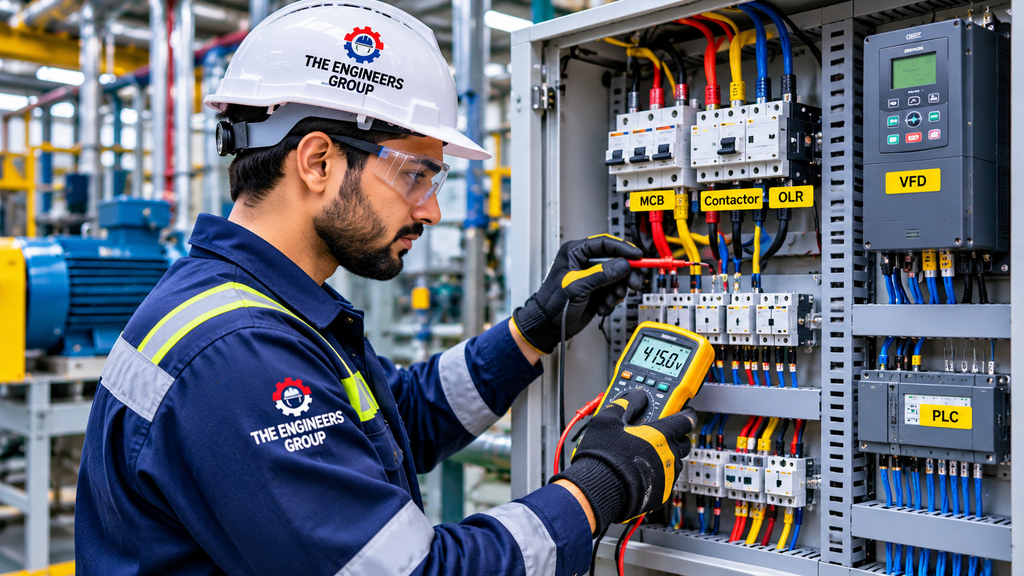
An Electrical Technician is responsible for performing practical electrical installation, testing, inspection, maintenance, and troubleshooting activities.
The main responsibilities include:
- Installing electrical equipment and wiring systems.
- Maintaining motors and electrical machines.
- Inspecting electrical control panels.
- Testing electrical circuits and cables.
- Checking electrical protection devices.
- Troubleshooting electrical faults.
- Performing preventive maintenance.
- Reading electrical drawings and wiring diagrams.
- Maintaining electrical safety standards.
- Supporting industrial electrical operations.
Electrical technicians are important members of industrial maintenance and engineering teams.
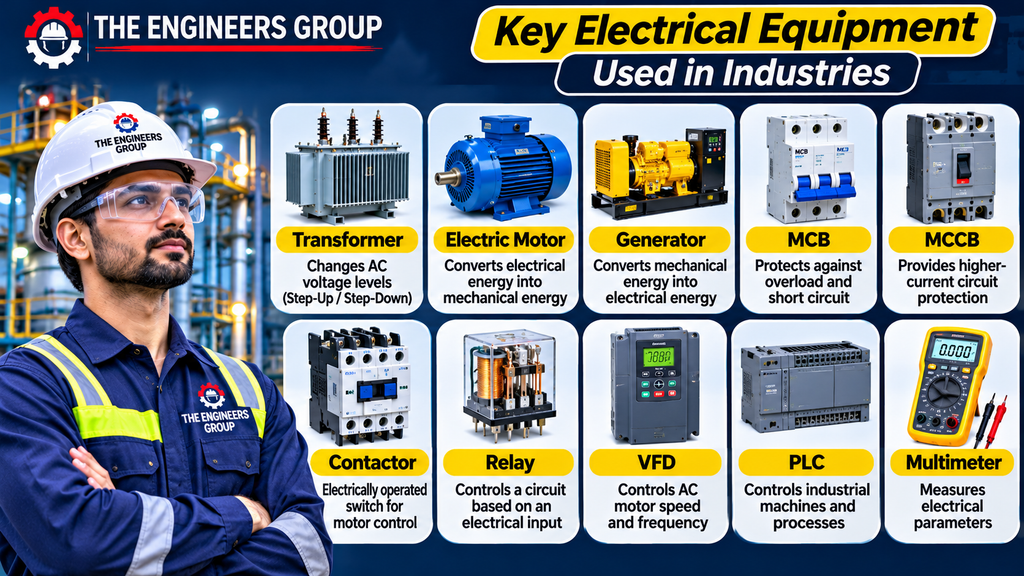
11. Electrical Equipment Used in Industries
Industrial electrical technicians regularly work with the following equipment:
| Equipment | Main Function |
|---|---|
| Transformer | Changes AC voltage levels |
| Electric Motor | Converts electrical energy into mechanical energy |
| Generator | Converts mechanical energy into electrical energy |
| MCB | Protects against overload and short circuit |
| MCCB | Provides higher-current circuit protection |
| Contactor | Switches electrical power circuits |
| Relay | Performs electrical control and protection functions |
| VFD | Controls AC motor speed |
| PLC | Controls industrial machines and processes |
| Multimeter | Measures electrical parameters |
| Megger | Measures insulation resistance |
| Clamp Meter | Measures current without disconnecting the conductor |
Understanding these components is essential for working in industrial electrical maintenance.
12. Skills Required to Become an Electrical Technician
A professional electrical technician should develop both theoretical knowledge and practical skills.
Important skills include:
- Understanding electrical fundamentals
- Reading electrical drawings
- Electrical wiring and installation
- Using electrical measuring instruments
- Motor testing and maintenance
- Transformer fundamentals
- Electrical panel troubleshooting
- Understanding protection devices
- VFD operation and basic programming
- PLC fundamentals
- Electrical safety procedures
- Industrial maintenance practices
Practical training and supervised experience are essential for developing professional competency.
13. Career Opportunities in Electrical Engineering
Electrical engineering offers career opportunities in different industries.
Some common job positions include:
- Electrical Technician
- Electrical Maintenance Technician
- Industrial Electrician
- Electrical Supervisor
- Electrical Maintenance Engineer
- Electrical Panel Technician
- Motor Maintenance Technician
- VFD Technician
- Electrical Testing Technician
- Substation Technician
Industries Hiring Electrical Technicians
- Manufacturing
- Oil and Gas
- Power Plants
- Steel Industries
- Cement Industries
- Pharmaceutical Industries
- Food Processing Industries
- Construction
- Infrastructure
- Industrial Automation
Career progression depends on technical qualifications, practical experience, safety competency, and industry requirements.
14. Safety in Electrical Engineering
Electrical safety must always be the first priority when working with electrical systems.
Electrical hazards can cause electric shock, burns, arc flash injuries, fire, and serious equipment damage.
Important safety practices include:
- Isolate electrical equipment before maintenance.
- Apply approved Lockout/Tagout (LOTO) procedures.
- Verify the absence of voltage using a properly rated tester.
- Wear suitable electrical PPE.
- Use appropriately rated insulated tools.
- Maintain proper earthing and bonding.
- Follow approved electrical drawings and procedures.
- Never touch exposed live conductors.
- Maintain safe working distances from electrical equipment.
- Only authorized and competent personnel should perform electrical work.
Always follow applicable electrical safety standards and site procedures.
15. Frequently Asked Questions (FAQs)
Q1. What is Electrical Engineering?
Electrical Engineering is a branch of engineering that deals with electrical power systems, electrical machines, circuits, control systems, and electrical equipment.
Q2. What is the basic concept of electrical engineering?
The basic concepts include voltage, current, resistance, power, energy, electrical circuits, AC supply, and DC supply.
Q3. What is the difference between an electrician and an electrical technician?
An electrician generally focuses on electrical installation, wiring, and repair work. An electrical technician may also perform equipment testing, industrial maintenance, control panel work, and troubleshooting. Actual responsibilities can overlap.
Q4. What qualifications are required to become an electrical technician?
ITI Electrical, Diploma in Electrical Engineering, and other relevant technical qualifications can provide entry pathways, depending on the employer and job requirements.
Q5. Which tools are commonly used by electrical technicians?
Common tools include digital multimeters, clamp meters, insulation resistance testers, voltage testers, earth testers, and insulated hand tools.
Q6. Why is electrical engineering important in industries?
Electrical engineering provides the power distribution, electrical machines, control systems, and automation infrastructure required for industrial operations.
Q7. What is industrial electrical maintenance?
Industrial electrical maintenance involves inspecting, testing, servicing, and troubleshooting electrical equipment to maintain safe and reliable plant operation.
Q8. Can beginners learn electrical engineering?
Yes. Beginners can start with basic concepts such as voltage, current, resistance, and circuits before progressing to electrical machines, wiring, protection, and industrial automation.
16. Electrical Engineering Interview Questions
Q1. What is electricity?
Answer: Electricity is a form of energy associated with electric charges and their movement.
Q2. What is voltage?
Answer: Voltage is the electrical potential difference between two points in a circuit.
Q3. What is electric current?
Answer: Electric current is the rate of flow of electric charge through a conductor.
Q4. What is resistance?
Answer: Resistance is the opposition offered by a material to the flow of electric current.
Q5. What is electrical power?
Answer: Electrical power is the rate at which electrical energy is transferred or consumed.
Q6. What is the difference between a motor and a generator?
Answer: A motor converts electrical energy into mechanical energy, whereas a generator converts mechanical energy into electrical energy.
Q7. What is a transformer?
Answer: A transformer is a static electrical device that transfers AC electrical energy between circuits through electromagnetic induction.
Q8. What is the function of a circuit breaker?
Answer: A circuit breaker interrupts current during specified abnormal conditions to protect electrical circuits and equipment.
Q9. What is earthing?
Answer: Earthing is an electrical safety arrangement that connects designated parts of an electrical installation to the earth through an appropriate earthing system.
Q10. What is industrial automation?
Answer: Industrial automation is the use of control systems, PLCs, sensors, drives, and other technologies to operate industrial processes automatically.
Conclusion
Electrical engineering forms the foundation of modern industries, power systems, manufacturing, and industrial automation.
Understanding electrical fundamentals, power generation, electrical machines, wiring systems, protection devices, and industrial equipment is essential for anyone who wants to become a skilled electrical technician.
The Electrical Technician Complete Course by THE ENGINEERS GROUP is designed to provide structured, job-oriented knowledge from basic electrical concepts to advanced industrial applications.
Continue learning with our upcoming modules and develop the technical knowledge required for a successful career in electrical engineering.
THE ENGINEERS GROUP – Learn Engineering, Build Skills, Grow Your Career.
CONNECT WITH THE ENGINEERS GROUP
Learn. Practice. Improve. Grow.
📘 EXPLORE OUR EBOOK 💬 CONTACT US ON WHATSAPP ▶️ SUBSCRIBE ON YOUTUBE FOLLOW US ON FACEBOOKTHE ENGINEERS GROUP
Free Engineering Education for Everyone